 Reviews

 Proudly American

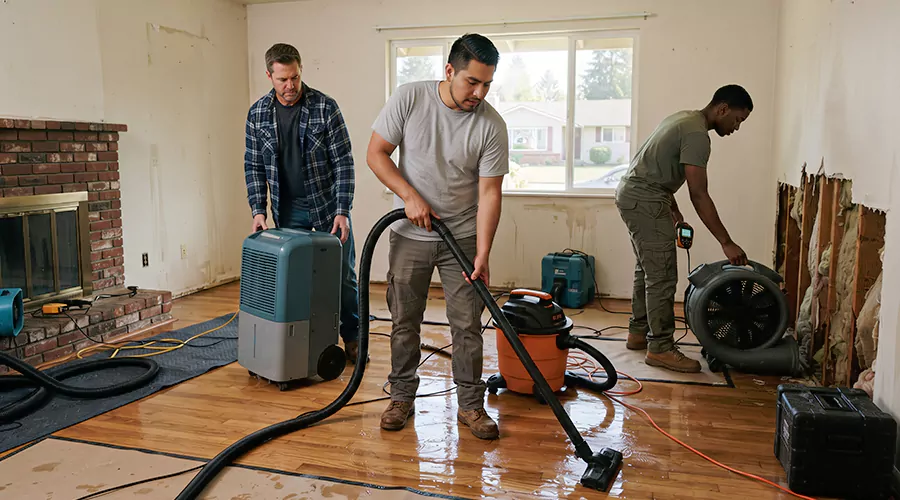
Water remediation is the process of removing unwanted water and drying affected building materials so a water-damaged area can return to a safe condition. Wet materials should begin drying within 24 to 48 hours when possible because prolonged moisture increases the chance of mold growth.
The process goes beyond removing a visible puddle. Moisture can remain inside drywall or flooring after exposed surfaces look dry. Insulation and framing can also hold hidden water.
What Does Water Remediation Mean?
Water remediation addresses the problems left after unwanted water enters a building. It combines water removal with controlled drying. Cleaning may follow when affected surfaces contain residue or contamination.
The ANSI/IICRC S500 standard covers procedures for water-damaged buildings. It addresses inspection and drying technology. The standard also covers building materials and project documentation.
A typical project can involve:
- Locating the affected area
- Extracting standing water
- Mapping hidden moisture
- Removing materials that cannot be saved
- Drying walls or flooring
- Cleaning affected surfaces
- Confirming drying progress
Water remediation is therefore a complete recovery process rather than a single cleanup task.
How Does the Water Remediation Process Work?
The process normally begins with finding the water source and determining how far moisture has traveled. Standing water is then extracted. Wet materials are evaluated before controlled drying begins. Moisture readings are checked throughout the project to confirm that conditions are improving.
| Stage | Main Purpose | Typical Action |
|---|---|---|
| Assessment | Find the affected area | Moisture inspection |
| Source control | Stop new water | Shutoff or repair |
| Extraction | Remove liquid water | Pumps or wet extraction |
| Evaluation | Decide what can remain | Inspect materials |
| Drying | Remove absorbed moisture | Airflow and dehumidification |
| Cleaning | Address contamination | Clean suitable surfaces |
| Verification | Confirm drying | Repeat moisture readings |
Water extraction and remediation work together. Extraction removes bulk liquid while later drying addresses moisture trapped inside building materials.
How Is Water Remediation Different From Water Mitigation?
Water mitigation focuses on limiting additional damage immediately after a leak or flood. Remediation covers the broader cleanup needed to return affected areas to a dry condition. The terms sometimes overlap because both can occur during the same water-loss project. For example, water mitigation may involve stopping water from spreading and removing standing water. Remediation can continue with material evaluation after the emergency phase. Water mitigation and restoration also describe different parts of recovery. Mitigation limits damage while restoration rebuilds finished surfaces after the structure is dry.
What Materials Can Usually Be Dried?
Many materials can remain after clean-water damage when drying begins quickly and the material remains physically sound. Hard surfaces are usually easier to dry than absorbent products. Some drywall can also remain when it has not swollen and its seams remain intact.
Materials that may be dried include:
- Sound drywall
- Wood framing
- Concrete
- Some hardwood flooring
- Carpet after limited clean-water exposure
Some materials are harder to save after heavy saturation. Wet cellulose insulation commonly requires replacement. Certain ceiling tiles may also need removal.
Surface appearance alone cannot confirm dryness. Flooring can look normal while the subfloor underneath remains wet.
How Long Does Water Remediation Take?
A small clean-water project may take a few days while larger losses can require a week or longer before repairs begin. Drying time depends on how deeply moisture entered the structure. Dense building materials can also take longer to reach a suitable dry condition.
A common timeline looks like this:
- Water extraction: Several hours to one day
- Initial drying: About two to three days
- Structural drying: Three to seven days or longer
- Cleaning and verification: One or more additional days
These are planning ranges rather than fixed deadlines.
The calendar should not determine when equipment is removed. Moisture readings provide better evidence that materials are ready for repair.
What Warning Signs Show Remediation May Be Needed?
Remediation becomes more likely when water moves beyond a small surface spill. Changes in walls or flooring can reveal hidden moisture after visible water disappears. Persistent odor can also point to damp material inside an enclosed area.
Watch for these warning signs:
- Drywall feels soft near the floor.
- Baseboards begin swelling.
- Paint bubbles or peels.
- Flooring starts cupping.
- Carpet padding stays damp.
- A musty smell develops.
- Ceiling stains continue expanding.
- Indoor humidity stays unusually high.
- Moisture readings remain elevated.
- Visible mold appears.
Emergency water remediation deserves faster attention when an active leak continues. Contaminated water also changes how affected materials should be handled.
What Can You Safely Check Yourself?
A basic moisture comparison can show whether a wet area is improving. Use a moisture meter designed for the material you are testing. Compare the affected area with a similar dry location elsewhere in the building.
Follow this simple check:
- Select a dry reference area.
- Record its moisture reading.
- Test the affected material.
- Mark the testing location.
- Repeat the reading the next day.
- Look for a steady downward trend.
Do not open walls simply to search for hidden moisture. Electrical wiring or plumbing can be concealed behind the surface.
When Should You Call a Professional?
Professional assessment is appropriate when water has entered walls or several rooms. Sewage exposure is another reason to avoid ordinary household cleanup. Electrical exposure also requires extra caution.
Consider water remediation services when:
- Sewage or outdoor floodwater is present.
- Several rooms became wet.
- Insulation is saturated.
- Hardwood flooring begins lifting.
- Electrical components became wet.
- Moisture stays high after active drying.
- Mold is visible.
- The affected area cannot be identified.
Commercial equipment can remove moisture more quickly in larger losses. Moisture mapping can also reveal wet areas that are difficult to locate by sight.
How Can You Reduce Future Water Damage?
Prevention starts with finding small leaks before they reach hidden building materials. Routine plumbing checks can reveal moisture around fixtures. Leak alarms can also provide early warning near appliances or water heaters.
Use this maintenance routine:
- Check beneath sinks every month.
- Inspect appliance hoses several times each year.
- Test sump pumps before storm season.
- Check ceilings after heavy rain.
- Keep indoor humidity below 60 percent when possible.
- Repair plumbing leaks promptly.
The EPA recommends keeping indoor relative humidity below 60 percent when possible. A range of 30 to 50 percent is preferred for routine moisture control.
A home water remediation project can often stay smaller when the source is found early.
Conclusion
Water remediation removes unwanted water and deals with moisture left inside building materials. The work can involve extraction followed by controlled drying. Cleaning and moisture verification may follow before repairs begin. Fast action matters because wet materials should ideally begin drying within 24 to 48 hours. If contamination or hidden moisture makes the scope unclear, professional assessment can help determine what can remain.
Frequently Asked Questions
Is water remediation the same as water restoration?
Not exactly. Remediation focuses on cleanup and drying. Water restoration can include rebuilding damaged finishes afterward.
Does remediation always require removing drywall?
No. Some drywall can dry in place when it remains sound and the water source is clean.
Can water remediation prevent mold?
Fast drying reduces the conditions that allow mold to grow. Moisture control is the main preventive step.
What is included in water remediation cost?
Water remediation cost can include extraction and drying equipment. Monitoring or material removal may also affect the total.
Is water damage clean up enough after a large leak?
Not always. Water damage clean up can leave hidden moisture inside walls or beneath flooring if the affected area is not fully dried.
What does remediation for water damage accomplish?
Remediation for water damage returns affected areas toward a dry and usable condition before final reconstruction begins.